Learn the basics
How to Crochet for Beginners
Crochet looks complicated when you watch someone do it fast, but the whole craft is built from a small handful of stitches you repeat over and over. Once you can chain, single crochet, and double crochet, you already know enough to make a dishcloth, a scarf, or a simple amigurumi toy. This is crochet for beginners step by step: what you need, how to hold everything, and the stitches to learn first, in the order that actually makes sense to learn them.
Recommended starter kit
What you actually need to start
You don't need much. A hook, some yarn, and a pair of scissors will get you through your first project.
- A hook. Size doesn't matter much for practice, but a mid-size hook (5mm / H-8) is the easiest to see and control while you're learning.
- Yarn. Pick a light-colored, medium-weight yarn (labeled "worsted" or "#4" on the label). Dark yarn hides your stitches, and fuzzy or novelty yarn hides them even worse. Save those for later.
- Scissors and a yarn needle. For cutting and weaving in ends when you finish a piece.
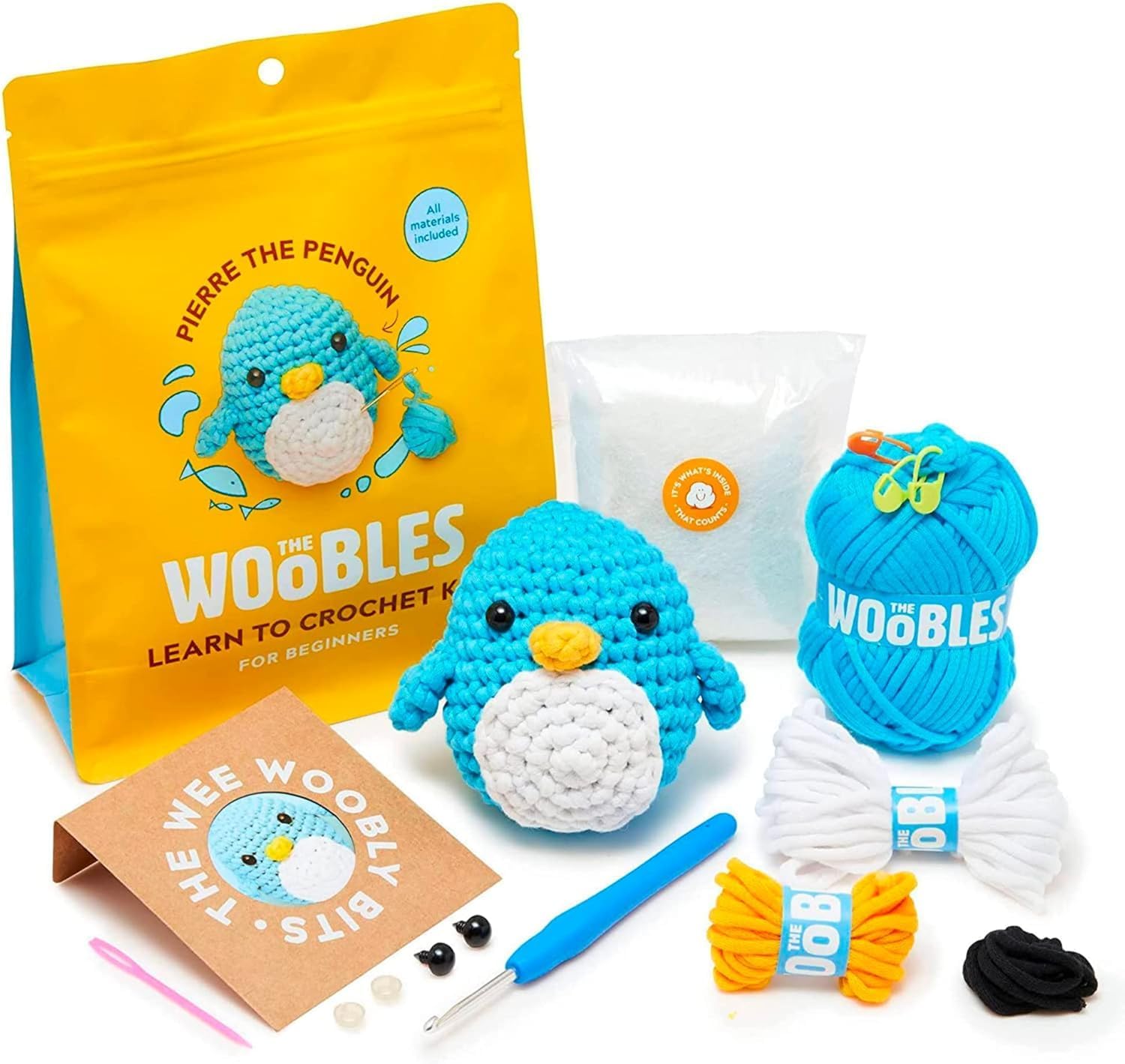
If you'd rather not piece all that together yourself, a beginner kit bundles the hook, yarn, and instructions in one box, which removes the guesswork on your first project. We've tested a few and written up which ones are actually worth it.
Holding the hook and yarn
There's no single correct way to hold a crochet hook. Most people use one of two grips:
- Pencil grip: hold the hook like a pencil, resting it between your thumb and index finger.
- Knife grip: hold the hook like you'd hold a knife, with your whole hand over the top.
Try both for a few minutes each. Whichever feels less awkward is the right one for you. For yarn tension, most people weave the yarn through the fingers of their non-dominant hand so it feeds out with a bit of resistance. Too loose and your stitches will be sloppy. Too tight and your hand will cramp fast. It takes a few sessions to find a tension that feels natural.
Learning to crochet step by step: the stitches, in order
Learn these four in this order and you can make almost anything a beginner pattern asks for.
- Slip knot and chain stitch (ch). Every project starts with a slip knot on the hook, then a chain of a length the pattern tells you to make. This is the foundation row everything else builds on.
- Single crochet (sc). The shortest, densest stitch. Good for dishcloths, coasters, and amigurumi because it creates a tight fabric with no gaps.
- Double crochet (dc). Taller and faster to work up than single crochet, since each stitch covers more ground. Common in blankets and scarves where you want fabric to grow quickly.
- Slip stitch (sl st). Used to join rounds or move across stitches without adding height. You'll use this constantly once you start working in the round for things like hats or amigurumi.
Don't try to learn six stitches at once. Practice single crochet until it's boring, then move to double crochet. Most of what trips people up as beginners isn't a new stitch, it's tension and counting, and those only get better with repetition.
Reading your work as you go
A big part of getting better early on is being able to look at your work and tell if something's wrong before you're ten rows deep. Two things to check as you go:
- Count your stitches at the end of each row. If the pattern says you should have 12 and you have 11 or 13, you dropped a stitch or added one somewhere, and it's much easier to fix on the row you just made than five rows later.
- Look at your edges. Beginner work often creeps wider or narrower row by row. If your rectangle is turning into a triangle, you're likely missing or adding a stitch at the start or end of each row without noticing.
Once counting stitches makes sense, the next skill worth learning is how to actually read a crochet pattern, since patterns use abbreviations and shorthand that look like a foreign language at first.
What to make first
Skip anything with color changes, shaping, or garment sizing for your first project. Good first projects:
- A simple single crochet dishcloth or coaster
- A basic single crochet or double crochet scarf
- A small amigurumi shape like a ball or simple animal (these use short rounds, so mistakes are cheap)
We keep a running list of simple beginner patterns that stick to these basics, all free, no account required.
When you're ready to buy your own supplies
Once you've practiced with whatever yarn and hook you started with, it's worth picking gear suited to actual projects instead of whatever was easiest to grab. Our guides on choosing crochet hooks and choosing beginner-friendly yarn cover what to look for and what to avoid. If you'd rather have everything picked out for you in one box, our best crochet kits for beginners guide breaks down which kits are worth the money and which ones oversell what's actually inside.
Get the beginner crochet starter guide
The stitches, the hook and yarn to start with, and the mistakes worth skipping — in one guide.
No spam. Unsubscribe any time.
Already subscribed? Download the 5 free beginner patterns (PDF)